
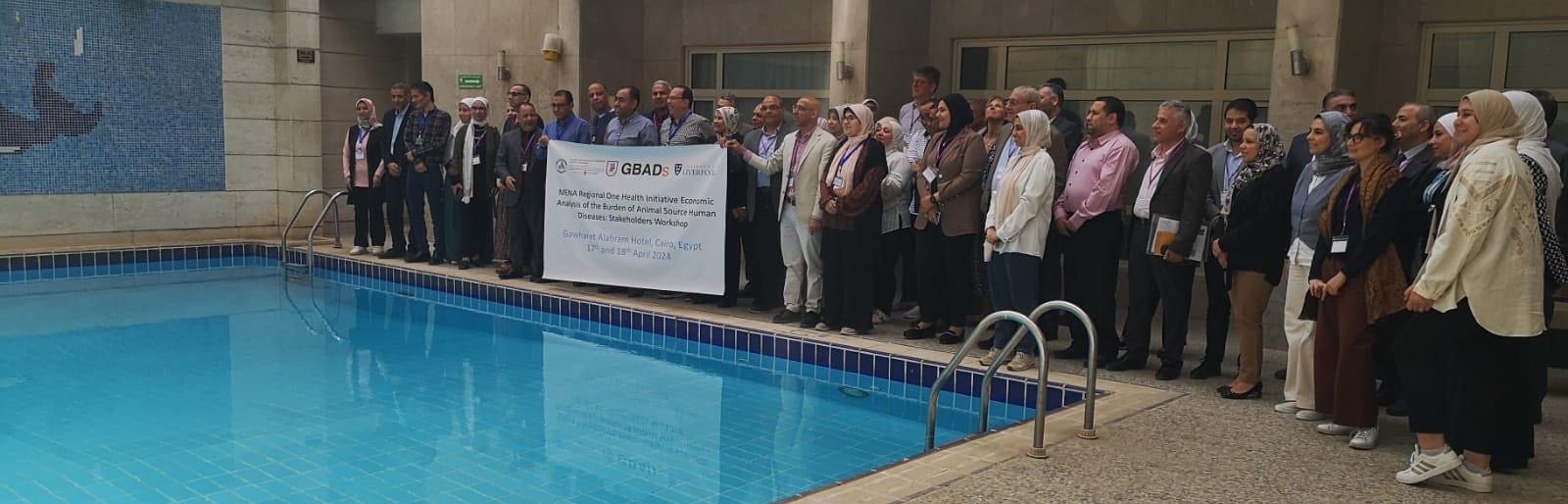
As part of the MENA Regional One Health Initiative, a team from GBADs has been working on the “Economic Analysis of the Burden of Animal Source Human Diseases” in the Middle East and North Africa. An important component of this project was a stakeholder workshop, held in Cairo on 17th and 18th April 2024. This followed on from smaller meetings and workshops in both Morocco and Tunisia earlier in the year.
The workshop, at the kind invitation of the Faculty of Veterinary Medicine of the University of Cairo, proved to be a fantastic collaborative exchange of ideas and knowledge, bringing together almost 60 participants, including many of the key stakeholders, experts and policy makers from across the human and animal health sectors in Egypt.
GBADs workshop day 1, Wednesday 17th April
Presentations
- An introduction to the workshop by Professor Eman Bakr & Professor Haytham Amer, Dean and Vice-Dean of the Faculty of Veterinary Medicine, Cairo University.
- An introduction to the “Economic Analysis of the Burden of Animal Source Human Diseases in MENA” project was presented by Dr Mahmoud Eltholth, setting out the work that the team has so far undertaken, in addition to workshop objectives.
- Professor Jonathan Rushton presented a well-received overview of the Global Burden of Animal Diseases (GBADs) programme.
Following on from this, a summary of the research and findings of the project so far, with a focus on Egypt, was delivered in three presentations by the research team:
- Burden of Foodborne Zoonotic Diseases: One Health perspective and literature review outcomes for animal health – Dr Louise Robin
- The Animal Health Loss Envelope – Dr Sinda Srairi
- The Burden of Foodborne Zoonotic Diseases in Humans: literature review outcomes and data gaps – Dr Carlotta Di Bari
In the afternoon we moved to round table discussions, providing the opportunity for participants to discuss key aspects of the project, share their perspective from their different professional roles, as well as addressing data gaps that remained after the initial research stages of the project.
Discussions amongst the tables were both energetic and productive. In each round table participants were asked to address specific questions, followed by one participant from each round table presenting a debrief to the entire workshop at the end of the session.
- Round table discussion 1: Disease burden estimates – practical applications for One Health – chaired by Dr Carlotta Di Bari
- Round table discussion 2: Current strategies for zoonotic foodborne disease under a One Health Umbrella – chaired by Dr Louise Robin
- Round table discussion 3: Assessment of the burden of animal diseases: key inputs to the Animal Health Loss Envelope – chaired by Dr Sinda Srairi


GBADs workshop day 2, Thursday 18th April
We continued into day two with an interesting reflection regarding the first day of the workshop, provided by Professor Jonathan Rushton, with objectives outlined for day two.
- Round table discussion 4: Macro-level trends and their impact on disease burden, with a focus on climate change, demographic shifts and evolving animal production dynamics and trade.
The final round table discussion was followed by a series of very informative presentations from guest speakers, which provided insight into current One Health activities, including strengths and challenges, in Egypt and the wider MENA region.
- One Heath activities in Egypt – FAO ECTAD: Dr Noura Hassan, FAO
- Virtual learning center (VLC):Dr Rehab Abdelkader, FAO RNE
- One Health activities; global and regional perspective: Dr Ahmed Saad, FAO RNE
- EU Foot and Mouth Disease presentation: Dr Shahin Baiomy, FAO
The morning concluded with a Q & A session, chaired by Professor Jonathan Rushton and Dr Mahmoud Eltholth. A wide range of topics were addressed, with a focus of interest emerging on the Animal Health Loss Envelope and its application for Egypt.
The afternoon was dedicated to an expert panel, discussing questions put to them on “the future of One Heath in the MENA region”. This platform led to a very engaging and open session, which succeeded in identifying further challenges and opportunities for One Health in Egypt, from the perspective of experts from Egypt.
Workshop conclusions and the way forward
The Egypt workshop was a unique opportunity to further inform our understanding of Economic Analysis of the burden of animal source human diseases in the Middle East and North Africa from the perspective of a large group of key stakeholders in Egypt. Amongst many findings which will be incorporated into this project, the standout points included:
- Data sharing deficiencies represent a significant problem and limiting factor in developing a full understanding of disease burden, and therefore disease control.
- There is a lack of active surveillance in animal health (with the exception of Brucellosis and Tuberculosis), with a reliance on passive surveillance reported to Government veterinarians from farmers.
- There is a clear willingness amongst participants to engage in One Health approaches around animal source human disease, following frameworks that have already been developed at national level