
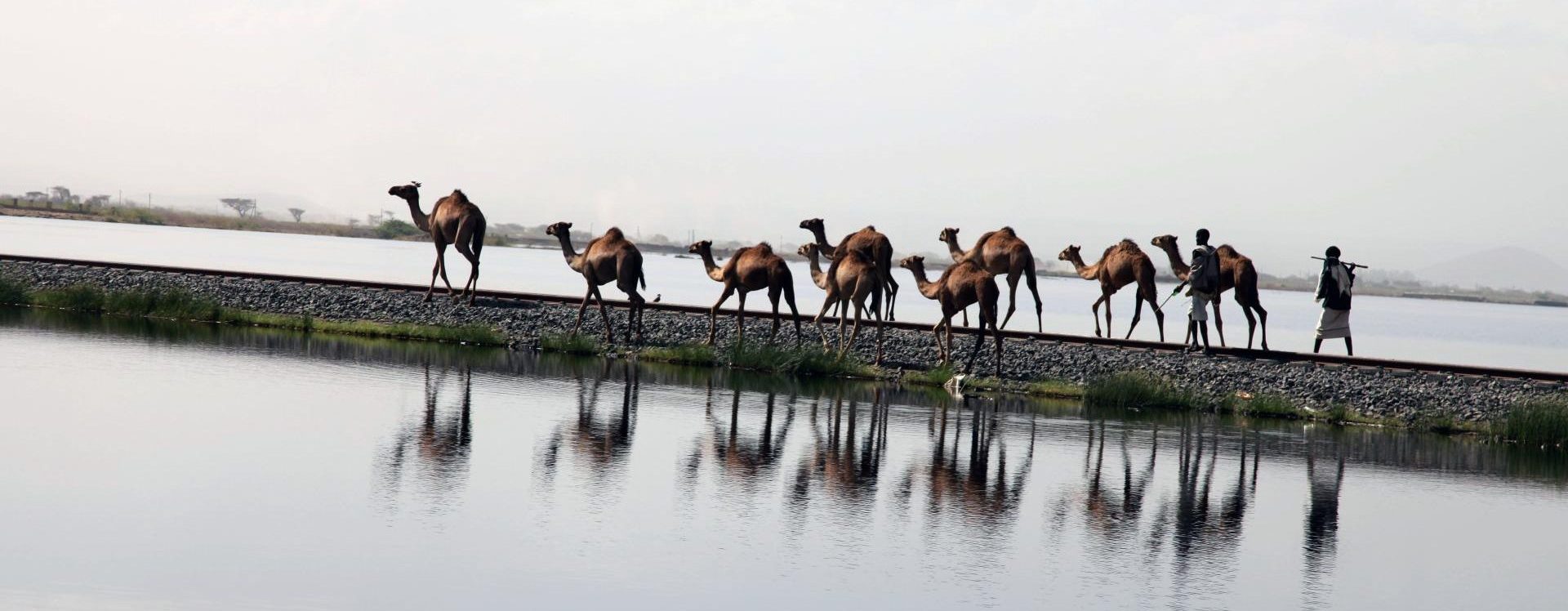
Prof Kebede Amenu, Dr Theo Knight–Jones and Prof Wudu T Jemberu, who all represent GBADs’ Ethiopia Case Study in ILRI, alongside Prof. Bekele Megersa who is the Head of the Department of Microbiology, Immunology, and Veterinary Public Health at the College of Veterinary Medicine, Addis Ababa University have released the following article on some key facts about Ethiopia’s camels, and their crucial but underappreciated role in supporting livelihoods and food security in the face of climate change.
Livestock Data for Decisions (LD4D) is a global network of livestock development professionals working with data to support more evidence-based decisions in LMICs. Learn more and get involved at www.livestockdata.org. You can find the published article released by Livestock Data for Decisions (LD4D) here.
Introduction:
For thousands of years, humans have relied on camels thanks to their ability to adapt to extreme environmental conditions. They can survive and produce milk, meat and fibre during droughts, famines and conflict. They are critical for food security and livelihoods in numerous regions of the world and specifically play important roles for marginalised pastoralist communities living in arid environments. But significant data gaps and low investment have led to camels being neglected in research and development initiatives in Ethiopia and across the Horn of Africa.
Photo: Apollo Habtamu (ILRI)